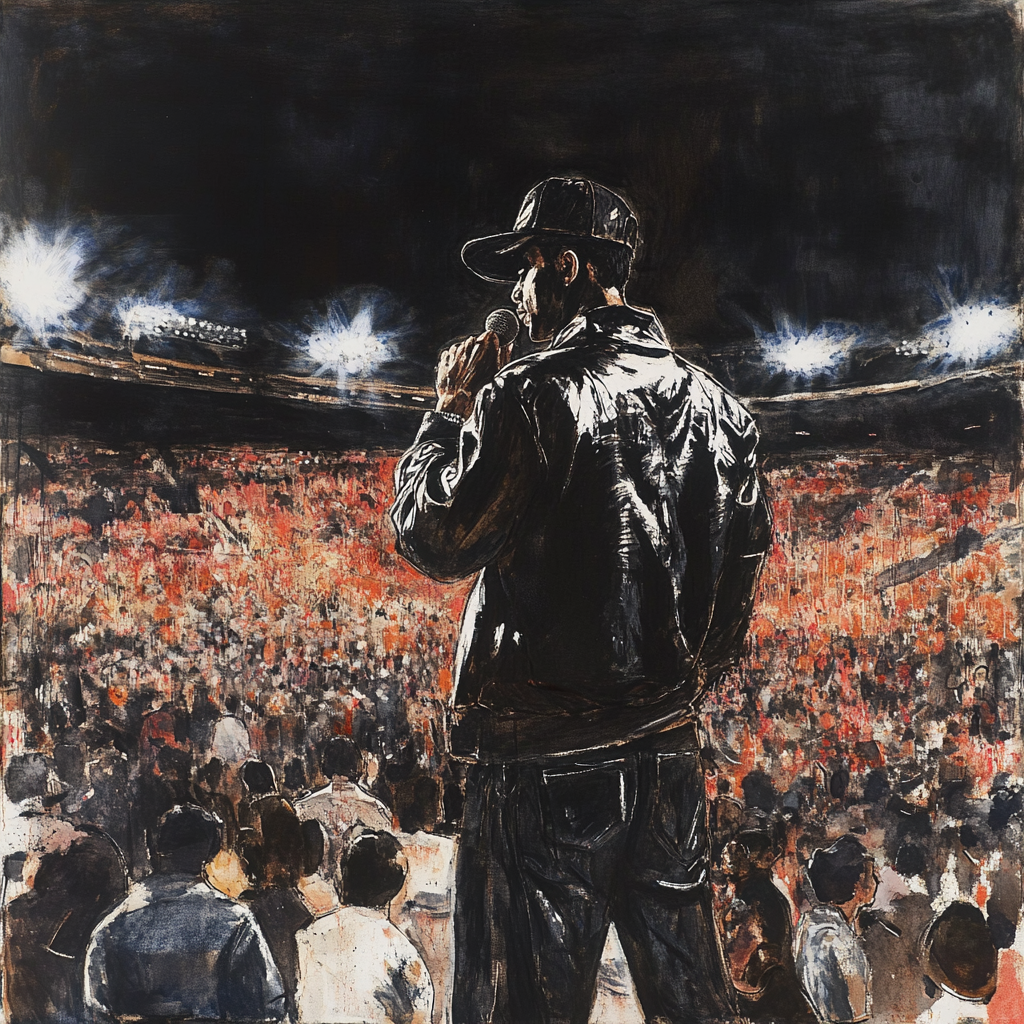
How Artists and Nostalgia Fuel Brand Revivals
Foreword · Abel Paul George
An old logo can return overnight. The culture that gave it meaning cannot. A garment carries the memory of the people who wore it: the music, the place, the years in which it became part of someone’s life. That history survives in wardrobes and photographs even when the company has lost its relevance.
Artists decide which parts of that history can speak again. Their choices can bring an archive into a new setting without erasing the people who kept it alive. A serious revival gives those choices room to change the product itself. Selling the memory is easy; contributing something worthy of it takes work.
Cultural memory as material
The return of a legacy brand begins with an existing relationship. Its name, silhouettes, graphics, and materials have already circulated through particular communities. Those associations can survive years of commercial inactivity. When an artist wears an archival piece, the object enters a new setting while carrying traces of its earlier life.
Nostalgia becomes productive when creators use that tension deliberately. Familiarity gives a revived brand a point of recognition. Reinterpretation gives someone a reason to encounter it again. A reissue can satisfy demand for a remembered object; a revival asks whether the brand has something further to contribute.
Labels such as Von Dutch, Pelle Pelle, Ecko Unltd., and Rocawear make this process visible. Their significance extends beyond a catalogue of products. They recall music, street style, aspiration, and the social settings in which those products acquired meaning. Younger audiences can inherit these associations indirectly, through recordings, photographs, resale listings, and the wardrobes of artists they follow.
This does not make every archive valuable in the same way. Memory is uneven. What one group remembers as a defining expression of its identity may appear to another as a brief fashion cycle. A useful revival begins by identifying whose memory is involved and what, specifically, has endured.
The artist’s role
An artist contributes more than visibility.
The way a garment is worn, combined, photographed, or placed within a performance can change how it is understood.
The artist supplies a context in which an old object becomes legible to a different audience.
That influence often precedes a formal partnership. Vintage pieces circulate through musicians, stylists, collectors, and resale communities before a brand organizes a campaign around their return. The resulting attention cannot be credited entirely to the company. It emerges through people who have continued to use and interpret the archive.
The Yeezy Gap collaboration illustrates the scale of the proposition. It brought an experimental approach to volume and silhouette into a familiar mass-market name. Whatever judgment one makes about the partnership’s commercial history, its design proposition concerned a change in the meaning of Gap, extending beyond the addition of an artist’s name to an existing product.
For a brand, working with an artist therefore involves a decision about authorship. If the artist is brought in only to validate predetermined merchandise, the collaboration has limited room to develop. Meaningful creative involvement requires influence over the object, its presentation, and the terms under which the relationship continues.
Changing the context
Realtree provides another example. A camouflage pattern developed in relation to hunting takes on a different significance in an urban wardrobe. The pattern remains recognizable, but its surroundings alter its function. The associations of concealment, rural life, and outdoor utility become material for a public expression of identity.
Louis Vuitton’s return to the Takashi Murakami collaboration raises a related question about the relationship between an archive and a contemporary visual climate. A familiar multicolored monogram can appear newly conspicuous when placed against a period of restrained branding. Its effect depends on the difference between its earlier context and the one into which it returns.
Subversion requires a specific change of use or interpretation. An artist needs to understand the original codes well enough to decide which of them can carry a new meaning. Merely increasing visibility or exaggerating a recognizable motif does not necessarily produce that change.
From attention to a continuing practice
A revival can attract considerable attention and still fail to establish a durable business. Cultural recognition does not resolve product quality, pricing, distribution, or the cost of maintaining a relationship with customers. Those conditions determine whether someone who notices a brand can become someone who lives with its products.
The histories of Pelle Pelle, Ed Hardy, and True Religion run through music, performance, and street culture. Their histories cannot be reduced to a single artist appearance or a single marketing decision. The relevant question is how several forms of participation reinforce one another over time.
For a brand, this requires a selective approach to its archive. It should be able to explain why a particular piece deserves to return, what has changed in its construction or use, and how it relates to the rest of the collection. A sequence of coherent decisions is more useful than an indiscriminate release of everything with recognizable graphics.
For artists, it requires attention to the terms of collaboration. Creative control, credit, compensation, and the ability to influence subsequent work all affect whether the partnership sustains an artistic practice. A brief increase in exposure may offer less than a smaller project with substantive responsibility.
Research and responsibility
Social engagement, resale activity, and references in music or imagery can help identify renewed interest. They require interpretation. An increase in mentions does not establish affection, purchase intent, or the long-term relevance of a product. Quantitative evidence becomes useful when placed alongside an understanding of the people producing it.
A commercial use of nostalgia carries a responsibility toward cultural memory. Companies may own trademarks and archives, but the social meaning of their products is shaped by communities. A revival that draws heavily on that history should acknowledge the people who kept it alive.
The most persuasive work allows an archive to develop. It retains enough specificity to remain recognizable while giving artists and audiences room to use it differently. Nostalgia then becomes a material for ongoing practice: something that can be examined, revised, and carried forward.
RJ Roberts & Abel Paul George ·
Journal of the Internet, Issue One, pp. 23–26. Foreword by Abel Paul George.